

Read This On Our Main Website: https://psoec.com/ways-to-help-children-learn-to-forgive/?feed_id=1791&_unique_id=61b154348044e
[ad_1]
Summary: Children usually tend to forgive wrongdoers who apologize, particularly if the perpetrator is of their "in-group" and the indignant little one has superior information of the speculation of thoughts.
Source: North Carolina State University
A current research means that instructing kids to grasp different folks's views would possibly discover it simpler for them to discover ways to forgive different folks. The research additionally discovered that instructing kids to apologize sincerely can assist them obtain forgiveness from others.
"Forgiveness is important in children and adults in rebuilding relationships and limiting future conflict," mentioned Kelly Lynn Mulvey, lead writer of the research and affiliate professor of psychology at North Carolina State University. “But we did not know a lot about what makes kids extra more likely to forgive others, particularly from early childhood by way of adolescence. We needed to analyze that with our research. "
To this end, Mulvey and her staff enrolled 185 children between the ages of 5 and 14 years of age. The researchers conducted a detailed interview with each child, in which background information was collected and the child's ability to “theory of mind” was assessed. Theory of Mind is your ability to understand that the beliefs, intentions, and desires of others are different from your own.
The researchers then led each child through a series of scenarios with other children who are “in the group” and “out of the group”. Specifically, each study participant was told that he was part of a group like the green team.
During the interviews, the researchers described that some children in the scenarios were also on the green team (they are in the group), while other children in the scenarios were on the yellow team (they were outside the group). In each scenario, interviewers asked study participants if they were willing to forgive a group that had excluded them from a game or activity.
There were three main outcomes. First, children are more likely to forgive when they have apologized. Second, children are more likely to forgive people who are “in a group”. Third, the more advanced a child's skills are in the theory of mind, the more likely it is to forgive others.
"We discovered that kids have a classy means to forgive others," says Mulvey. "Children are capable of restore relationships with others and are often desirous about it."
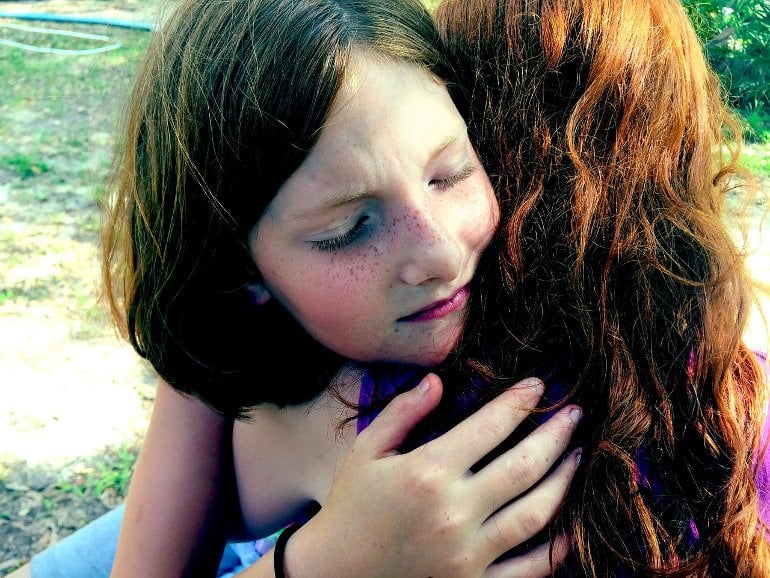
The researchers recognized two issues dad and mom and academics ought to give attention to concerning forgiveness.
One helps kids perceive the significance of apologizing in a significant method.
"Children are capable of choose up insincere apologies, and insincere apologies weren't conducive to forgiveness," says Mulvey. “The apology must make it clear that someone understands why what they did was wrong. This in turn increases the likelihood that other children will give them a second chance. "
The second focus is on helping children understand other people's perspectives, even if they are different from you.
“One of the biggest impacts of our study is that teachers and parents need to actively help children develop theoretical skills,” says Mulvey. “A very good place to begin is to get kids to elucidate the explanations for his or her actions and the way different folks would possibly really feel about them. Helping younger folks develop these expertise in childhood will assist them navigate a various and complicated world. "
About this news from neurodevelopmental research
Author: Matt Shipman
Source: North Carolina State University
Contact: Matt Shipman - North Carolina State University
Image: The picture is in the public domain
Original research: Closed access.
"The role of theory of mind, group membership, and apology in forgiveness between groups in children and adolescentsBy Kelly Lynn Mulvey et al. Journal of Experimental Psychology: General
summary
See additionally

The function of principle of thoughts, group membership, and apology in forgiveness between teams in kids and adolescents
Research on forgiveness in kids and adolescents is growing, however little is understood concerning the mechanisms of improvement underlying group forgiveness in kids and adolescents.
In this research adolescents (m = 9.39 years, SD = 1.67, n = 185, 107 feminine and 78 male; 54.6% European Americans, 20.5% African American, 8.1% Latinx, 5.9% Asian American, 3.8% multiracial, and seven.1% different) offered judgments and arguments about forgiveness in hypothetical eventualities with violations in between Groups and teams.
Participants with a extra subtle principle of the thoughts have been extra more likely to have forgiven transgressors and have been extra more likely to differentiate their interested by how sorry ingroup and outgroup transgressors shall be. Participants have been extra more likely to forgive the ingroup members and those that apologized than the outgroup members and those that didn't apologize.
The outcomes present that adolescents, particularly these with extra superior theoretical expertise, have a classy understanding of forgiveness between teams.
[ad_2]
Read This On Our Main Website: https://psoec.com/ways-to-help-children-learn-to-forgive/?feed_id=1791&_unique_id=61b154348044e
Comments
Post a Comment